Generative artificial intelligence is transforming the way content is created — text, images, audio, video. Millions of users employ AI tools daily to generate content that is then published, disseminated, and used in business and personal contexts. Behind this technological revolution, however, lies a series of unresolved legal questions: when AI-generated content causes harm, who bears responsibility?
This text is informational in nature and does not substitute for individual legal advice.
Why Is Liability for AI Content Legally Complex?
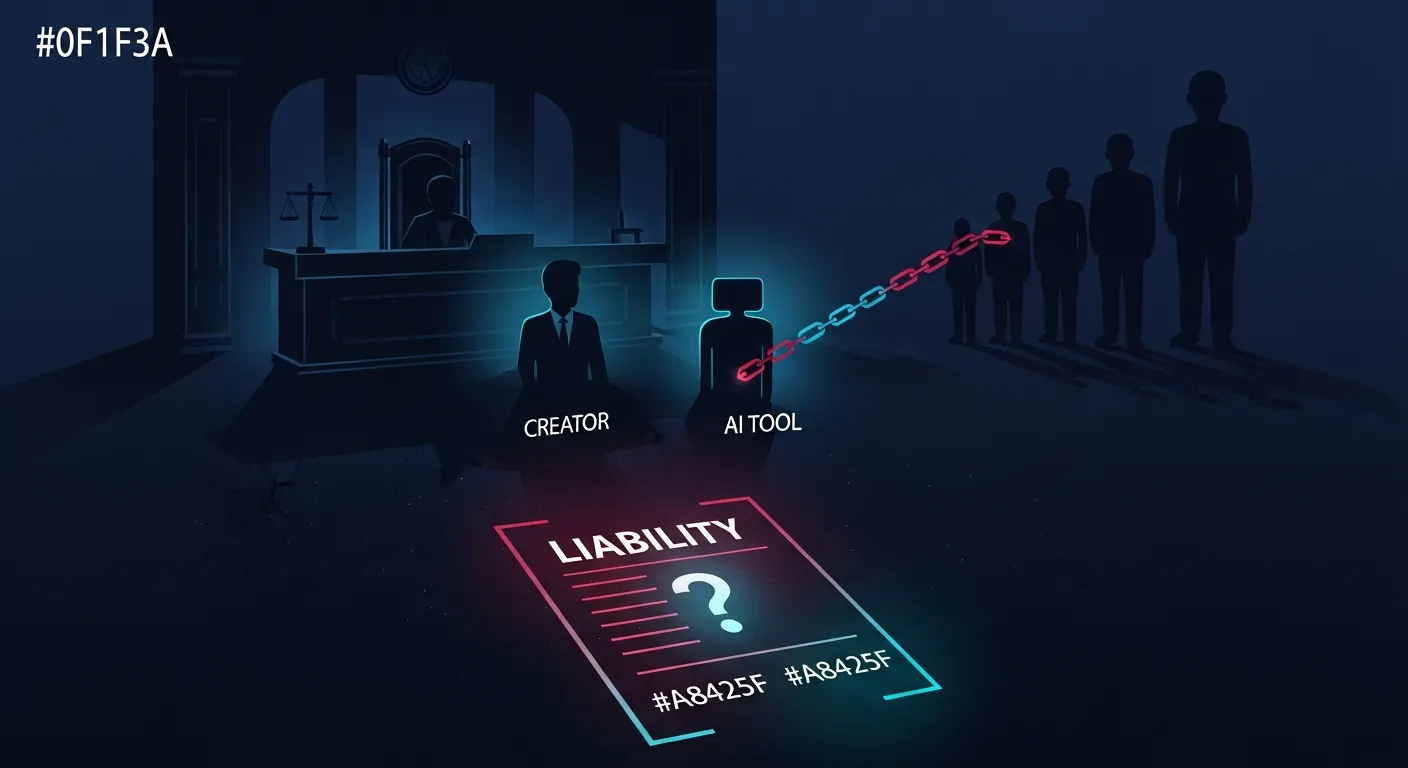
The traditional legal framework for liability presupposes a clearly defined actor: an author, publisher, or editor. An AI system does not fit any of these categories. It is not a legal person, has no legal capacity, and cannot be sued. Harm arising from AI-generated content must be attributed to one of the participants in the chain: the developer who built the model, the company that commercialized it, the operator who integrated it into their service, or the end user who applied and published the content.
It is precisely this diffusion of liability — its dispersal along the technical and commercial value chain — that makes this area one of the most dynamic in contemporary technology law.
Copyright in AI-Generated Content
The question of who is the author of AI-generated content directly affects who holds rights over that content and who bears liability if the content infringes another’s rights.
Under the current legal framework in the EU and Serbia, copyright holders may only be natural persons — only a human being can be an author. An AI system cannot be an author in the legal sense. This means that content generated exclusively by AI, without a human creative contribution, enters the public domain (in theory) or is not protected by copyright.
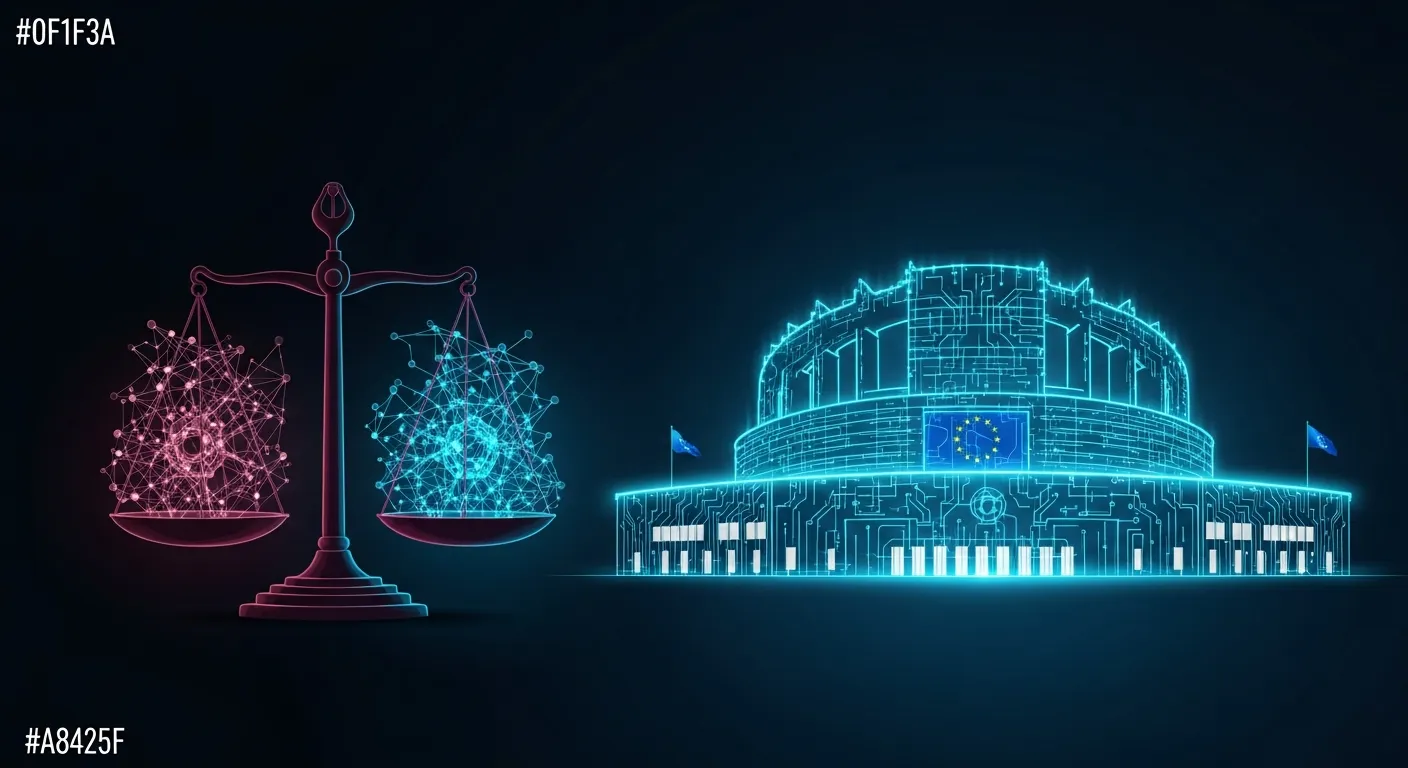
However, the EU Artificial Intelligence Act (AI Act, Regulation (EU) 2024/1689, in force as of 1 August 2024, with provisions entering into application progressively) introduces a transparency obligation: AI-generated content must be labelled as such, particularly in the domain of deepfakes and synthetic audiovisual content. Breach of this obligation strengthens the legal basis for operator liability.
On the other hand, if an AI model uses protected works during training without an appropriate licence, there is a risk of liability for copyright infringement — not of the AI system, but of the company that developed the model. This is the subject of numerous active lawsuits in the United States and the EU.
Disinformation, Defamation, and Falsehoods Generated by AI
Language models sometimes generate factually inaccurate content — known in the jargon as “hallucinations”. When such content makes a false claim about a real person or company, it may constitute defamatory content.
What is the legal treatment? Under current law, liability for defamatory statements generated by AI falls on the user who published that content, because publication — regardless of the source — remains an act of the user. The operator of an AI service may bear liability if it was aware that the system was generating such content and failed to take reasonable measures.
The EU Digital Services Act (DSA, Regulation (EU) 2022/2065) establishes the general framework for platform liability for user-generated content — including content generated by a user with the aid of AI tools. Platforms must have mechanisms for reporting and removing illegal content.
The EU AI Act and Liability Across the Value Chain
The EU Artificial Intelligence Act introduces an explicit allocation of obligations according to the role of each actor:
Providers (developers) of general-purpose AI models (GPAI — general-purpose AI): Must document training data and comply with copyright law; models posing systemic risk are subject to additional evaluation and safety protocol obligations.
Providers of high-risk AI systems: Bear the greatest burden of obligations — system registration, technical documentation, human oversight mechanisms, risk management, and post-market monitoring.
Operators: Companies that integrate AI systems into their services are responsible for the appropriate use of the system in the specific context and must implement appropriate controls.
Users: End users who generate and publish content bear responsibility for use in accordance with the instructions of the provider and operator.
This pyramid of liability means that a company integrating ChatGPT, Claude, or a similar model into a business process is not exempt from liability — it is an operator and must understand the limitations of the system it uses.
Liability for AI Content in a Business Context
A particularly sensitive area is the use of AI in business communications, legal documents, medical recommendations, or financial advice. If an AI system generates an inaccurate legal analysis or erroneous medical information that is acted upon and causes harm, the question of liability becomes immediate and potentially very costly.
Businesses that use AI in such contexts must have a clear usage policy: who is responsible for verifying AI-generated content before application, how the use of AI in decision-making is documented, and whether clients or users are informed of the role of AI in the process.
The absence of such a policy does not relieve the company of liability — on the contrary, it may be treated as a failure of due diligence.
Frequently Asked Questions (Q&A)
If I use an AI tool and the generated content infringes someone’s copyright, am I liable? Generally yes — the user who publishes the content bears primary liability. Liability may be shared with the service operator if the service was designed in a manner that systematically infringes the rights of others, but this is more difficult to prove. The terms of service of AI services frequently contain indemnification clauses that govern the allocation of this liability between the service and the user.
Is “the AI generated it, not me” a valid defence against liability? Under current law, not sufficiently. Publication of content is an act of the user, regardless of the tool used in its creation. A defence based on lack of intent or lack of knowledge is possible, but its success depends on the specific circumstances and jurisdiction.
What about deepfake content that depicts real persons? Deepfake content depicting real persons in false scenarios, particularly sexually explicit or politically manipulative ones, is subject to liability for infringement of personality rights. The EU AI Act prescribes a clear labelling obligation for such content as artificially generated, while practices posing an unacceptable risk — harmful AI manipulation and deception aimed at materially distorting behaviour in a manner that causes significant harm — fall within the category of prohibited AI practices. Creating and distributing such content exposes the actor to civil and potentially criminal liability.
Should contracts with clients regulate the use of AI in the provision of services? Where AI is used in processes that affect clients, transparent disclosure in terms of service and/or specific contractual clauses constitutes an ethical standard, and increasingly a legal obligation.
Conclusion
Legal liability for AI-generated content is in the process of being defined through regulation and case law. What is already clear is that liability does not disappear merely because the content was created by an algorithm — it shifts and is distributed along the chain from developer to end user.
Businesses that proactively establish an internal policy for the use of generative AI — with clear responsibilities, verification mechanisms, and transparency towards users — face significantly lower legal risk than those that disregard this development.
Schedule a consultation to learn how to position your company for the safe and responsible use of AI tools.
Sources: – https://www.wipo.int/about-ip/en/artificial_intelligence/policy.html – https://digital-strategy.ec.europa.eu/en/policies/liability-artificial-intelligence – https://www.brookings.edu/articles/liability-for-ai-generated-content-whos-to-blame/ – https://eur-lex.europa.eu/eli/reg/2024/1689/oj (Regulation (EU) 2024/1689 — AI Act) – https://eur-lex.europa.eu/eli/reg/2022/2065/oj (Regulation (EU) 2022/2065 — DSA)