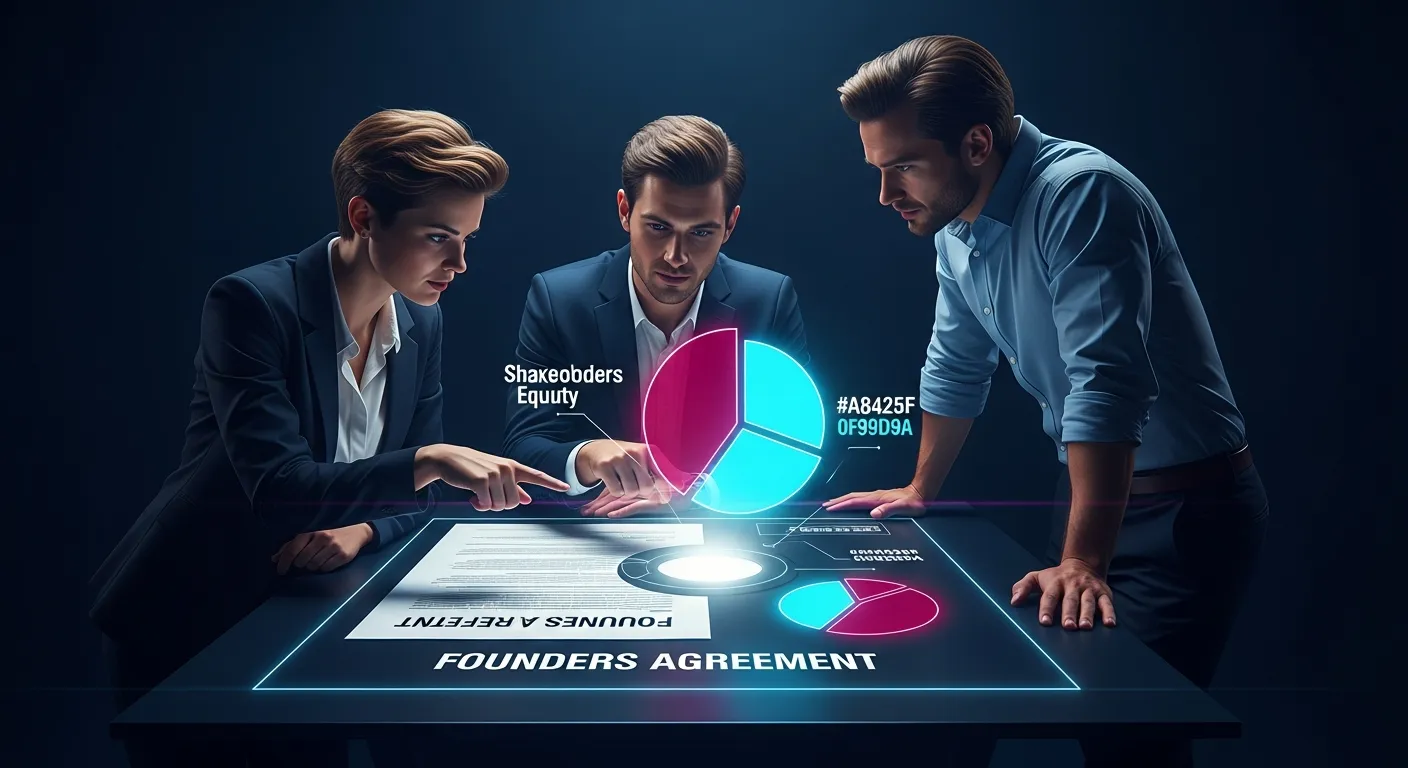
Decentralized autonomous organizations — abbreviated as DAO — represent one of the most ambitious experiments in the field of organizational law and corporate governance in history. Conceived as organizations governed collectively by all members, through voting on a blockchain network, without central management, DAOs face a fundamental legal problem: in a large number of jurisdictions, they do not exist as legal entities. This text is informational in nature and does not replace individual legal advice.
What Is a DAO and How Does It Work
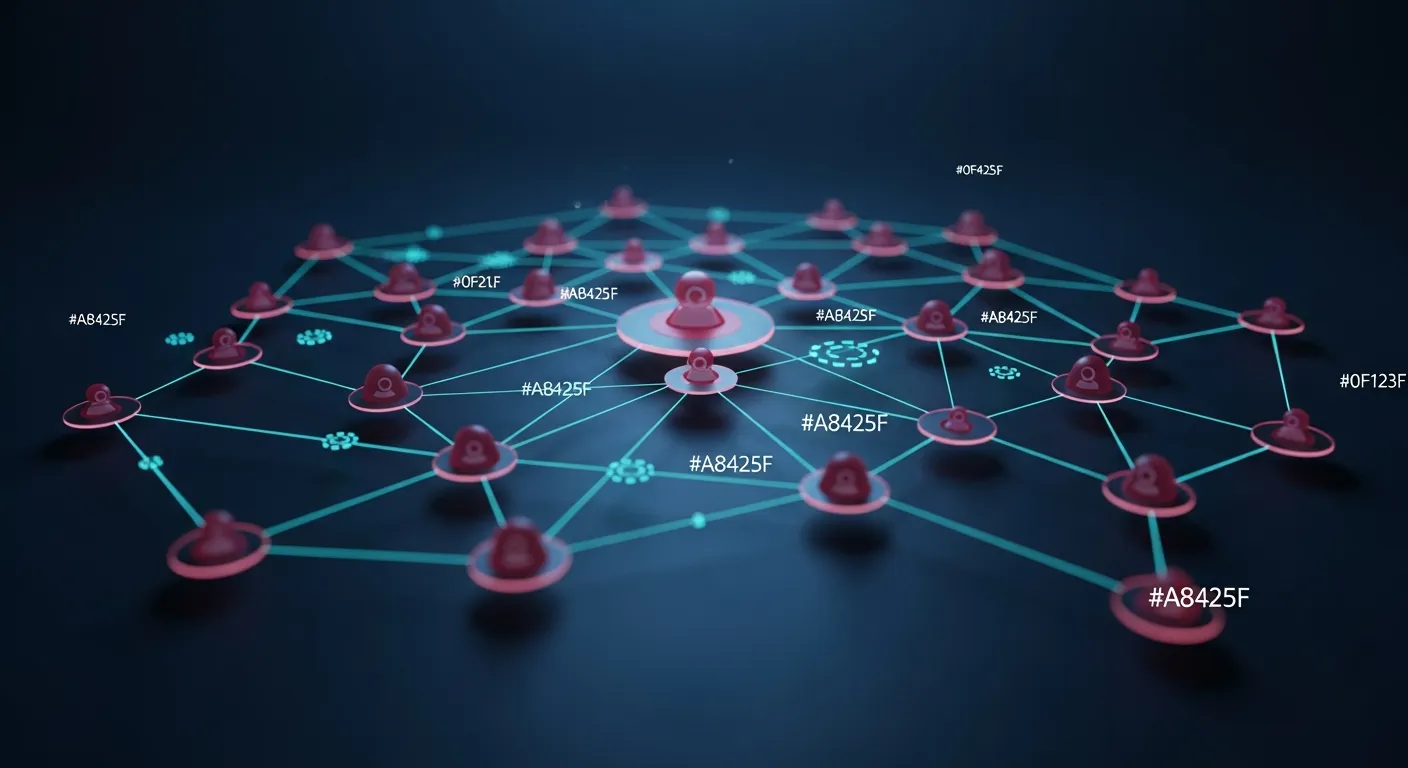
A DAO is an organizational model in which the rules of governance, decision-making, and management of assets are codified in smart contracts on a blockchain network. DAO members typically hold governance tokens that grant them voting rights on proposals concerning protocol governance, treasury distribution, or rule amendments.
The appeal of the DAO model lies in: – the transparency of all transactions and votes on a public blockchain; – the elimination of the need for traditional management and the potential for corruption; – global, pseudonymous membership that transcends jurisdictional boundaries; – the automated execution of decisions through smart contracts.
However, the same attributes that make DAOs attractive also make them legally problematic.
Legal Vacuum and the Problem of Liability
In most jurisdictions, including Serbia and most of the EU, a DAO has no legal personality. It is neither a commercial company, nor an association, nor a cooperative. It cannot own property, enter into contracts, open a bank account, or sue and be sued.
This gives rise to a serious problem: if a DAO does not exist as a legal entity, who is liable for its obligations and any resulting harm?
The dominant legal position — which has begun to be affirmed through case law in the United States (the cases of Sarcuni v. bZx DAO, in which a court in 2023 denied a motion to dismiss and allowed the proceedings to continue, and CFTC v. Ooki DAO, concluded by judgment in 2023) and academic discussion in the EU — is that a DAO may be treated as an unregistered general partnership. In such a case, all members may be jointly and severally liable for the obligations of the DAO — without limitation. This means that a user who once voted on a DAO proposal, even for a minor amount, may potentially be personally liable for the entire debt of the DAO in the event of a dispute.
This perspective has raised significant concern in the Web3 community and has spurred efforts to create dedicated legal frameworks.
Pioneer Jurisdictions: Wyoming and the Marshall Islands
Certain jurisdictions were the first to respond to the challenge of DAO legal status. Wyoming adopted legislation in 2021 allowing DAOs to register as a special type of LLC (Limited Liability Company) — a DAO LLC — thereby granting members limited liability. The Marshall Islands, as an offshore jurisdiction, adopted their own legislation in 2022 (DAO Act 2022) permitting the registration of a DAO as a legal entity with limited member liability.
These approaches, while pioneering, have limited global reach. A DAO registered in Wyoming or the Marshall Islands may still face legal problems in the EU or Serbia, particularly if its effects are felt in those jurisdictions.
Some EU jurisdictions are considering their own models, and international organizations, including the OECD, have published analyses of possible approaches to integrating DAOs into existing legal systems. Harmonization at the EU level, however, had not been achieved as of the date of publication of this text.
DAO Governance — Legal Implications of Voting
Participating in DAO voting carries potential legal implications that many participants do not consider. By voting in favor of a particular proposal, a member may:
- contribute to the adoption of a decision that causes harm to third parties;
- be classified as a “fiduciary” with obligations similar to those of a company director;
- be exposed to regulatory action if the DAO carries out regulated financial activities.
The level of legal risk varies depending on the role in the DAO — a passive token holder, an active voter, and a DAO “core developer” face different liability profiles.
EU Regulatory Perspective and MiCA
MiCA (The EU’s Markets in Crypto-Assets, Regulation (EU) 2023/1114) explicitly places services related to crypto-assets provided in a fully decentralized manner, without intermediaries, outside its scope — although this exemption is interpreted narrowly in practice — but does not resolve the question of the legal status of DAO organizations. Financial activities carried out by a DAO — fund management, provision of DeFi (decentralized finance) services, token issuance — may, depending on their specific characteristics, be regarded as regulated financial activity regardless of the decentralized structure.
ESMA (European Securities and Markets Authority) has published guidelines and consultation documents on when decentralization does not exempt from regulatory obligations — the assessment is carried out on a case-by-case basis, analyzing substance rather than form. Legal uncertainty, however, remains high.
Legal Options for DAO Founders and Participants
For DAO founders targeting EU or Serbian users or capital, the following options are considered in practice:
- a “wrapper” structure — establishing a regular company (LLC, AG, SAS) that legally “wraps” the DAO, acquires legal personality, and assumes part of the liability;
- selection of a jurisdiction whose legal framework expressly regulates DAO status;
- clear documentation of governance tokens and voting mechanisms;
- establishment of internal AML/KYC (anti-money laundering / know your customer) policies where appropriate.
For DAO participants, the following facts are relevant: – voting is not a risk-free activity; – more active roles in DAO governance carry a greater legal liability profile; – the regulatory framework in relevant jurisdictions is changing rapidly.
Frequently Asked Questions (Q&A)
Can I be personally liable if the DAO of which I am a member is involved in a legal dispute? There is a genuine legal risk, particularly in jurisdictions that treat a DAO as an unregistered general partnership. The level of risk depends on your role and activities within the DAO, as well as on the specific activities of the DAO itself.
Can a DAO have a bank account? Not directly, without legal personality. Some solutions involve establishing a separate legal entity (a multi-sig company or foundation) that holds assets on behalf of the DAO.
Is a DAO legally permitted in Serbia? Serbian law does not explicitly prohibit the formation of or participation in a DAO, but it also does not grant it legal status. In practice, any DAO that carries out regulated financial activities in Serbia or with Serbian users is subject to the relevant Serbian legislation.
What is the safest legal model for a DAO wishing to operate in the EU? Currently, the “offshore DAO LLC + EU operational wrapper” model (a foundation or limited liability company (d.o.o.)) provides a relatively good balance between decentralized governance and legal certainty for EU users and investors. This is, however, a rapidly evolving area.
Conclusion
The legal status of DAOs remains one of the most complex open questions in the field of blockchain law. Ignoring this question carries concrete legal risks — from personal liability of members to regulatory sanctions. Timely legal structuring is not an obstacle to innovation, but its foundation, and the choice of a specific model depends on the circumstances of each individual project — the roles of participants, the jurisdiction, and the activities carried out by the DAO.
Sources: – https://www.coindesk.com/policy/2021/04/21/wyoming-recognizes-daos-as-legal-entities/ – https://www.midao.org/ (Marshall Islands — DAO entity registration, DAO Act 2022) – https://eur-lex.europa.eu/legal-content/EN/TXT/?uri=CELEX%3A32023R1114 (MiCA, Regulation (EU) 2023/1114) – https://www.cftc.gov/PressRoom/PressReleases/8715-23 (CFTC v. Ooki DAO)